Hazel Park
Resident Resources
Hazel Park, MI
A ReLeaf Michigan Municipal Member

As a resident of Hazel Park, you have special access to additional resident resources from ReLeaf Michigan!
On this page you’ll find helpful information to answer common questions about the incredible benefits trees provide and how to care for them, including how to make sure your trees stay healthy, the best times of year for pruning, and much more.
Don’t see the answer you’re looking for in the FAQ below? Contact us directly and we’ll get back to you shortly.
Tree Guidelines and Ordinances for Hazel Park
To view guidelines about which trees to plant included in the Hazel Park City Zoning Ordinance, see page 41 in this document
City Tree Maintenance Program
Learn about Hazel Park’s tree maintenance program by clicking here
Parks and Recreation Master Plan
Hazel Park’s Parks and Rec Department has a detailed master plan for the community. Read it here
I'M PLANTING A TREE. WHAT DO I NEED TO KNOW?
Download ReLeaf Michigan’s guide for tips and advice on when and how to plant trees. By following these tips, you can make sure your trees have the best chance of adapting to their new ground and staying healthy.
"Healthy Trees in the Home Landscape"
This presentation explains micro-climate environmental conditions and discusses oak wilt, a devastating disease to oak trees. Learn how to recognize it and what you can do to help prevent it. Led by Gary Eichen, the Plant Health Care and Lawn Manager at SavATree in Troy and a Certified Arborist with over 30 years of experience in Plant Health Care and Lawn Care.
"Michigan Natives in the Landscapes"
Many people are surprised to learn how many plants (trees, shrubs, flowers) already in our gardens and yards are native to Michigan, and how many more there are that can add beauty and other endearing qualities. Discussion will include what makes a tree ‘native’ and when they are best used or when a nonnative would better suit the goal. Garden writer and instructor Janet Macunovich and horticultural photographer Steven Nikkila will give you tips for making the most of native plants’ best qualities: lower maintenance, less disease and pest problems and more wildlife.
I'M PLANTING A TREE SEEDLING. WHAT DO I NEED TO KNOW?
"How to Plant a Seedling"
ReLeaf Michigan staff takes you step by step through planting a seedling. Learn from watching our team at work in this YouTube Video
How to Plant an Oak Seedling
ReLeaf Michigan’s how-to guide for planting an oak seedling with the best chance of it remaining healthy into adulthood. While this was created for planting oak seedlings, most of the steps can be applied to a variety of tree types. (PDF)
HOW SHOULD I CARE FOR MY TREE
"Tree Risk: It's Real and Requires Assessment"
Are your trees at risk? As essential as trees are to our well being, they can also injure people and property. Proper maintenance and inspection and critical. Find out how to assess the health of your trees. Led by Kay Sicheneder, consulting arborist.
Tree Owner's Manual for the Midwest
From selecting trees to planting and caring for them, this is a great guide for any property owner. Created by the US Department of Agriculture Forest Service. (PDF)
WHAT'S UP WITH MY TREE?
"What's Up with My Tree?"
Concerned about the health of your tree? This recorded webinar, led by Kay Sicheneder, chief consulting arborist and plant health care manager for Owen Tree Service, discusses the most imminent threats facing trees in Michigan. Learn how to identify the problem and what to do to ensure the long-term health and vitality of Michigan’s trees.
WHAT IS OAK WILT AND HOW DO I PREVENT MY OAK TREE FROM GETTING IT?
Oak wilt is a serious concern in Michigan. To protect your trees, it is important that you do NOT trim your oak tree during warmer months when insects are present (April to October). Learn more about how to protect your oak trees below.
- Oak Wilt – Overview
- Oak Wilt – Identify, Prevent & Control – USDA
- Oak Wilt – Symptoms and Diagnosis
- Oak Wilt and Two Lined Chestnut Borer – How to differentiate
ReLeaf Michigan is also a founding member of the Michigan Oak Wilt Coalition.
WHAT OTHER INVASIVE SPECIES OR TREE ISSUE SHOULD I BE AWARE OF?
The protection of Michigan’s trees and forests from pests and diseases is a collective responsibility. For comprehensive information on identifying, preventing, evaluating, and managing these threats, please consult the resource links provided below.
- Asian Longhorned Beetle
- Beech Bark Disease
- Beech Leaf Disease
- Emerald Ash Borer
- Hemlock Woolly Adelgid
- Heterobasidion Root Disease
- Imazapyr Herbicide Epidemic
- Pear Trellis Rust – UCONN Fact Sheet
- Spongy Moth
- Spotted Lanternfly
- Spruce Decline in Michigan – MSU Extension Fact Sheet
- Two Lined Chestnut Borer – UW Fact Sheet
HOW DO TREES AFFECT OUR HEALTH?
"Healthy Trees Create Healthy Communities"
Trees provide a natural dose of preventative medicine in ways that might surprise you. Watch this recorded webinar led by ReLeaf Michigan’s executive director, Melinda Jones, to learn the latest research on how trees impact our health in measurable ways. This presentation was sponsored by Priority Health, whose wellness director, Tom Spring, joins Melinda.
HOW ARE COMMUNITIES INCORPORATING TREES INTO THEIR PLANS?
"Planning for Community Trees: Canopy Assessments, Management Plans, Ordinances and Master Plans"
Many Michigan communities have adopted canopy goals, tree planting objectives or expressed a desire to expand urban and community forests. In this recorded webinar, learn what tools you need to develop local strategies that best meet community objectives. Led by Lee Mueller, Market Manager with Davey Resource Group.
SHOULD I ADD MULCH AROUND MY TREES? HOW MUCH?
When applied correctly, mulching becomes a maintenance practice that can limit needless stress to a tree or shrub. Stressed trees or shrubs are vulnerable to infection or attack. Mulch can serve as a defensive layer that regulates moisture and temperature. Mulch can also help protect your roots in areas of heavy traffic or mowing, keeping your valuable trees and shrubs healthy.
As a rule of thumb, a 2- to 3-inch layer of mulch that extends 4 to 6 feet from the base of the tree should be applied above the existing soil.
Be sure to leave a 3-inch gap between the base of the tree and the mulch so that the mulch is not directly touching the tree trunk. The completed application resembles a doughnut – NOT a volcano!
Watch a related short video on Effective Mulching at the Davey YouTube Channel.
IS PRUNING MY TREES IMPORTANT? HOW OFTEN AND WHEN SHOULD I DO IT?
Tree pruning is extremely important to help a tree develop proper branch structure so that it is less likely to suffer damage or a failure in the future. Proper pruning can also help manage potential insect or disease issues.
Pruning every three to five years is a good rule of thumb, but it could be less, depending on the tree. Storm events may also cause damage that needs to be addressed immediately.
The best time to prune depends on what the pruning is to accomplish. Properly completed maintenance pruning, which comprises approximately 80% to 90% of the pruning necessary, can be completed at anytime of the year, although for oak trees you should wait until the colder months to protect against oak wilt (see above). For other species, it’s not so important when it’s completed, but it’s critical that it be properly done. Poor pruning techniques, e.g. topping and over thinning, should never be completed regardless of the time of the year.
For related information, check out the USDS Publication “How to Prune Trees” (PDF)
IS IT OKAY TO 'TOP' A TREE?
No. Simply put, topping a tree damages its defense system while destroying its aesthetic beauty and changing its structure forever.
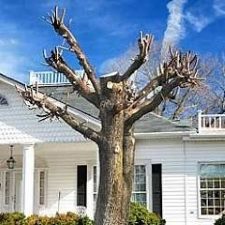
In fact, topped trees are actually deemed unsafe and become increasingly hazardous over time. This is because a topped tree has to rely on using stored energy when the top of its canopy is gone. This results in weak branches and attachments. Even more, a topped tree is more prone to disease and insect infestations because its natural state has been substantially disrupted.
HOW CAN I TELL IF MY TREE IS SICK?
Symptoms of a sick tree can include wilted, scorched, chewed, blackened, and discolored leaves resulting from disease or chewing and sucking insects. Close inspection of stems, twigs, and the trunk of a tree is equally important. Fungi or mushrooms located near the base of a tree is another indication of a sick or dying tree.
Any abnormality that you spot can reveal clues that can be used to diagnose a sick tree. Armed with this information, it’s important to consult with a certified arborist for a careful examination to make a proper diagnosis of the problem.
- Leaf Symptoms
- Premature Leaf Drop: Leaves falling off sooner than usual
- Spots: Dark, discolored, distorted shapes, or holes (example Tar Spot on Maple trees)
- Wilting or Curling: May be a sign of drought, diseases like Dutch Elm Disease, or issues with root health
- Sparse or No Leaves: Bare spots in the canopy
- Root Symptoms
- Ground heaving
- Leaning trunk
- Trunk or Bark Symptoms
- Wood Decay: Small holes (sign of borers) or soft wood
- Fungus: Mushrooms growing at the base of the tree or on its trunk
- Deadwood: Dead, dying, drooping, breaking branches
- Bark: Cankers, open wounds, splits, tears, cracks, bark peeling/looser than usual
For a related video on “Signs of a Sick Tree”, check out this resource on the Davey YouTube Channel
ReLeaf Michigan is here to help provide answers to your tree planting & care questions. If you don’t see the answer you’re looking for in the FAQ above, we are happy to help! Please complete the Ask An Arborist form below. Please allow us a few days to respond to your question. Thank you for your patience!
ASK AN ARBORIST
"*" indicates required fields
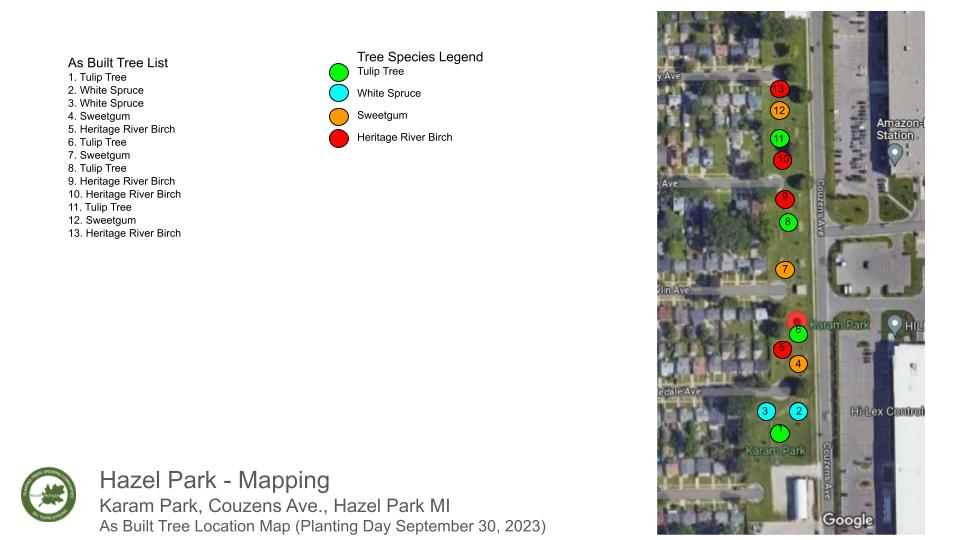
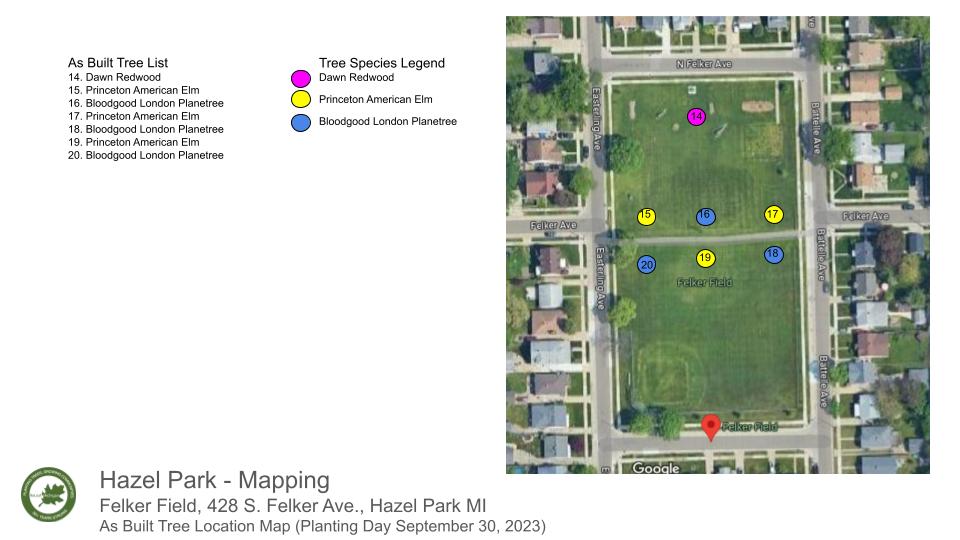
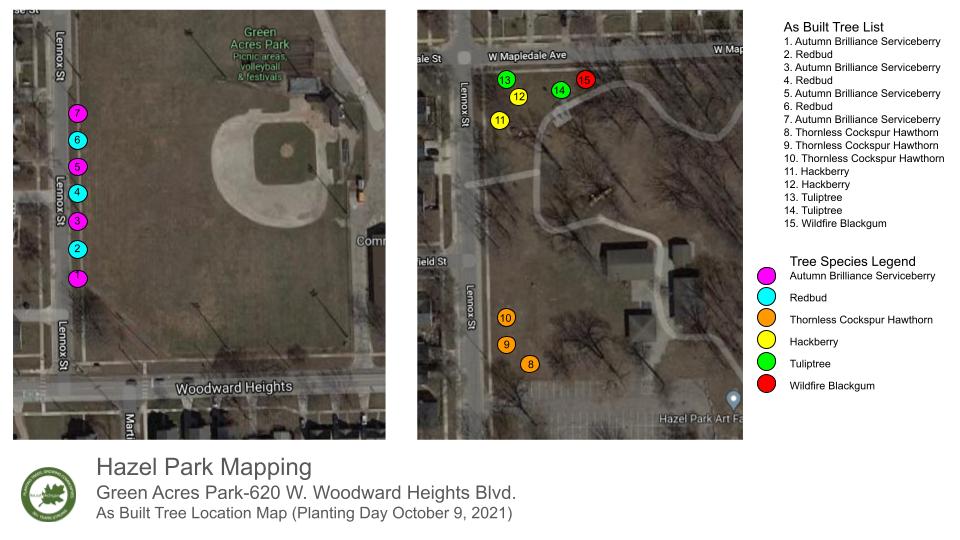
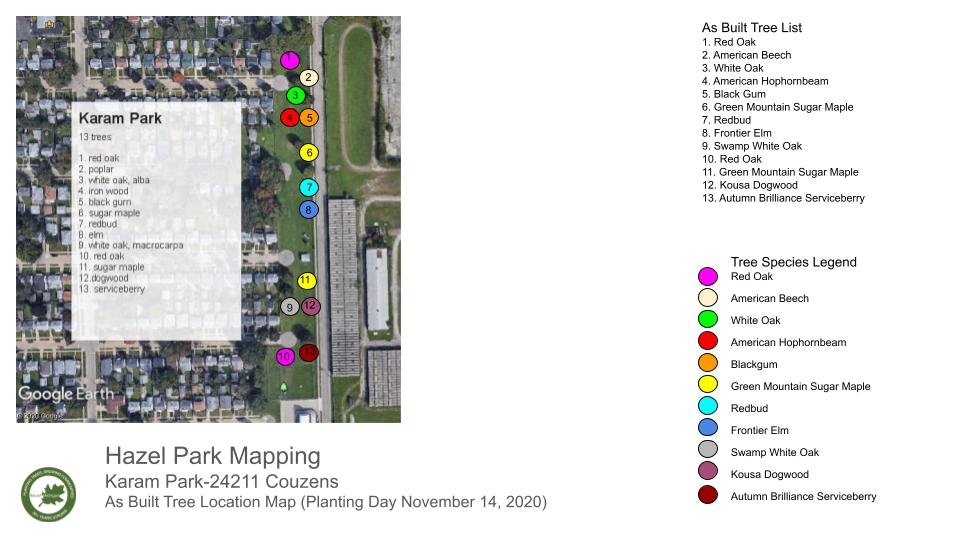
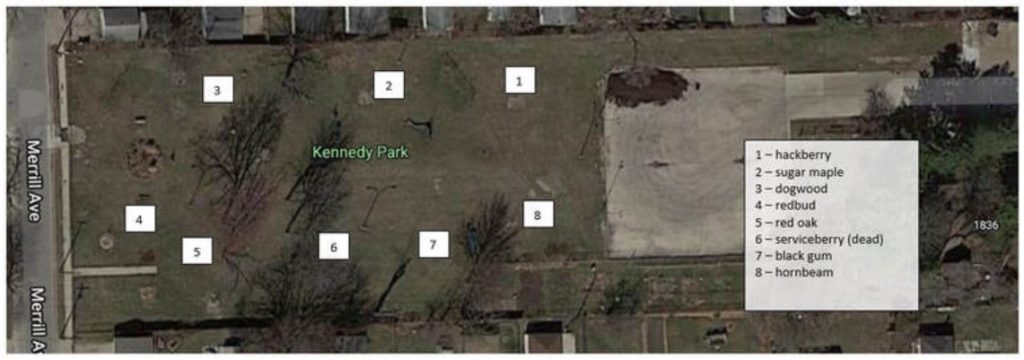
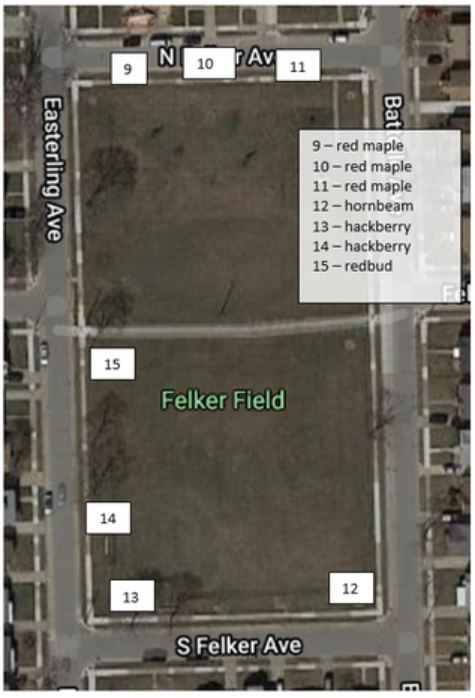
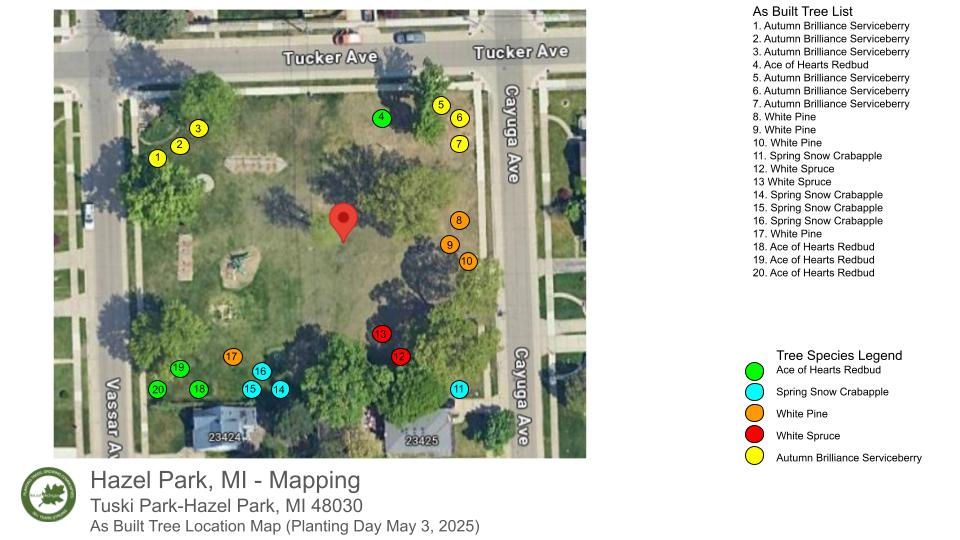
Map of Recent Tree Plantings in Hazel Park
ReLeaf Michigan has partnered with the City of Hazel Park on several tree plantings in recent years. See below for the specific locations of these plantings and the individual trees species and locations.
Visit the parks to see how quickly the trees are growing!
May 03, 2025: 20 trees planted in Tuski Park
September 30, 2023: 13 trees planted in Karam Park
September 30, 2023: 7 trees planted in Felker Field
October 09, 2021: 15 trees planted in Green Acres Park
November 14, 2020: 13 trees planted in Karam Park
October 19, 2019: 8 trees planted in Kennedy Park
October 19, 2019: 7 trees planted in Felker Field

Sign Up for the ReLeaf Michigan eNewsletter
Are you interested in learning more about volunteer opportunities, tree planting events, free presentations, or just hearing about the good work that ReLeaf Michigan is doing across the state? Visit our About page and sign up for our Monthly eNewsletter here
ReLeaf Michigan is the ONLY statewide tree planting and education non-profit in Michigan! Since 1988, we have served over 700 communities and engaged tens of thousands of volunteers to plant over 35k+ trees!
To learn more about how YOU can help make a difference today by joining our community, please visit – How to Help: Ways to Give